鸟巢
How to Understand
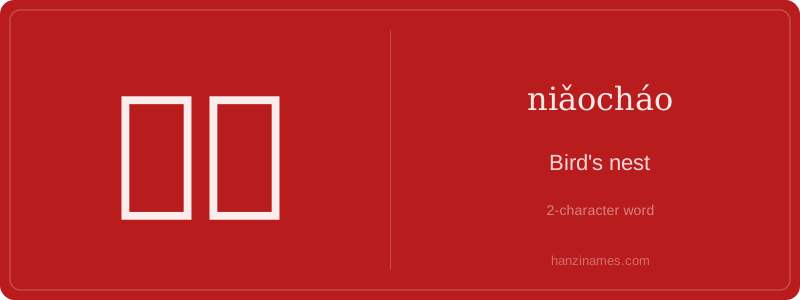
鸟巢 (niǎocháo) literally means 'bird's nest' and refers to the structure that birds build to lay eggs and raise their young. It is also famously known as the nickname for the Beijing National Stadium, designed by architect Herzog & de Meuron for the 2008 Olympic Games.
The character 鸟 (niǎo) means 'bird,' and 巢 (cháo) means 'nest.' Together, they form a compound word that directly translates to 'bird's nest.' The etymology reflects a simple, visual concept that has been used in Chinese language and culture for centuries.
While commonly used to describe actual bird nests, 鸟巢 has become culturally significant as the iconic name of the Beijing National Stadium. It is often used in media, tourism, and international discussions about China’s modern architecture and global events.