疲倦
How to Understand
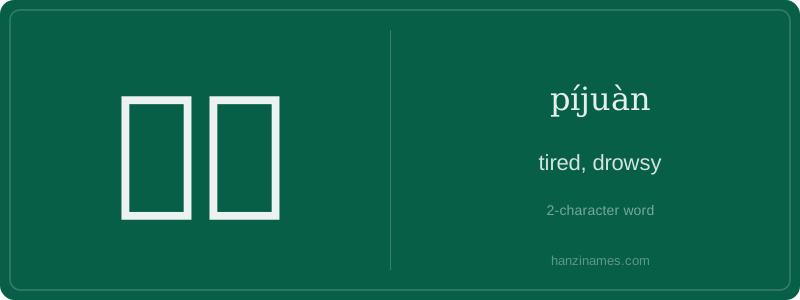
疲倦 (píjuàn) means 'tired' or 'drowsy,' typically describing a state of physical or mental exhaustion. It is often used to express fatigue after work, study, or long travel, and is more commonly used in formal or literary contexts compared to simpler terms like 累 (lèi), which also means 'tired.'
The character 疲 (pí) originally meant 'exhausted' or 'weary,' while 倦 (juàn) means 'faint' or 'drowsy.' Together, they form a compound that conveys a deep sense of tiredness, often implying a need for rest or sleep.
疲倦 is frequently used in everyday conversations to describe how someone feels after a long day. It can also appear in literature or poetry to evoke a mood of weariness. In Chinese culture, taking time to rest when tired is valued, and 疲倦 is a common way to express that need.