全部
How to Understand
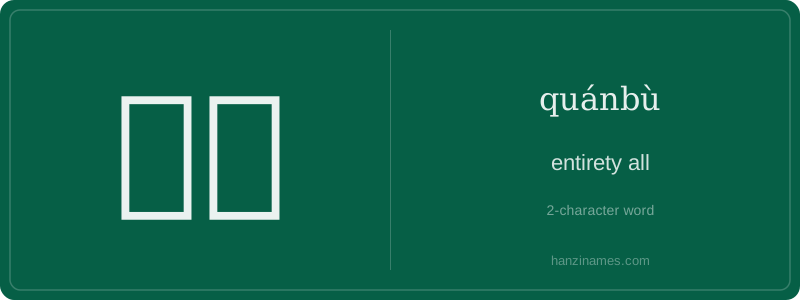
全部 means 'all' or 'the entirety' of something. It emphasizes completeness, indicating that nothing is left out. Unlike '全' (quán), which can also mean 'all,' 全部 often implies a more comprehensive or total inclusion.
The character 全 (quán) originally meant 'whole' or 'entire,' and 部 (bù) refers to a part or section. Together, they form a compound meaning 'the whole' or 'all.' This structure is common in Chinese, where two characters combine to express a more specific concept.
全部 is frequently used in daily speech and writing to emphasize total coverage, such as in statements about time, quantity, or scope. It appears in phrases like 全部完成 (quánbù wánchéng), meaning 'completely finished.' Understanding this term helps learners grasp the nuance of completeness in Chinese expressions.