提供
How to Understand
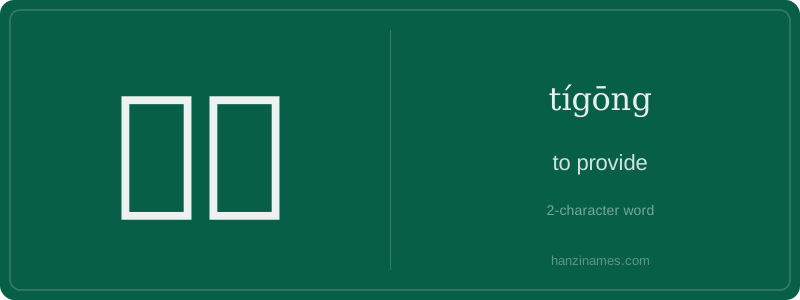
提供 (tígōng) means 'to provide' or 'to supply,' typically referring to offering something tangible or intangible, such as resources, information, or services. It emphasizes the act of making something available for use or consumption.
The character 提 (tí) originally meant 'to lift' or 'to raise,' and later came to mean 'to present' or 'to offer.' 供 (gōng) means 'to supply' or 'to provide,' often in a formal or dedicated sense. Together, they form a term that conveys the idea of offering something deliberately and purposefully.
提供 is commonly used in both formal and informal contexts, such as in business, education, and daily life. For example, a company might provide services, a teacher might provide materials, and a government might provide public resources. It's also used in phrases like 提供帮助 (tígōng bāngzhù), meaning 'to offer help,' or 提供信息 (tígōng xìnxī), meaning 'to provide information.'