未来
How to Say
👀 0
How to Write
Meaning: future
How to Understand
未来
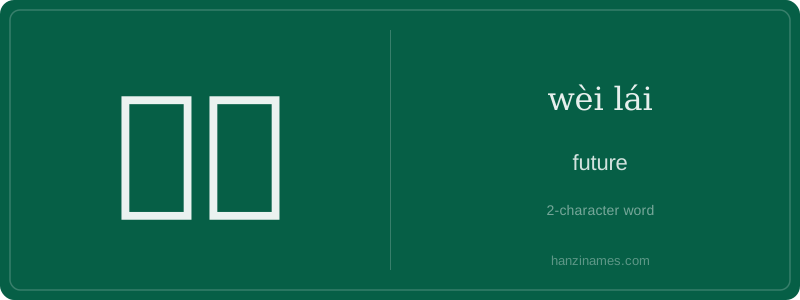
未来 (wèi lái) means 'future' in English, referring to the time that has not yet arrived. It emphasizes the period after the present, often associated with possibilities, hopes, and plans for what is to come.
The character 未 (wèi) originally meant 'not yet' or 'unrealized,' while 来 (lái) means 'to come' or 'arrive.' Together, they form a compound that literally translates to 'what has not yet come,' which encapsulates the concept of the future.
在未来 (zài wèi lái) is a common phrase meaning 'in the future.' 未来 is widely used in both formal and informal contexts, such as in discussions about technology, personal goals, or global trends. It carries a sense of optimism and forward-thinking in Chinese culture.
Example Sentences
他相信未来会更好。
He believes the future will be better.
我们正在为未来做准备。
We are preparing for the future.