我的
How to Understand
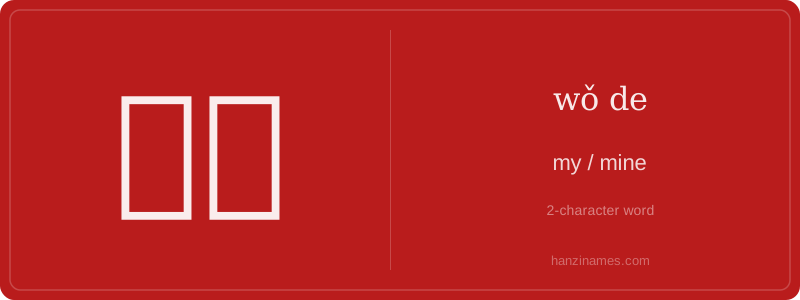
我的 is a possessive pronoun in Chinese, used to indicate ownership or association with the speaker. It directly translates to 'my' or 'mine' in English. Unlike English, which uses separate forms for different subjects (e.g., my, your, his), Chinese uses the same form 我的 for all persons when indicating possession.
The character 我 (wǒ) means 'I' or 'me,' and 的 (de) is a possessive particle that links the subject to what is being possessed. Together, they form a grammatical structure that indicates ownership or relationship.
在日常交流中,我的 is commonly used in sentences like 我的书 (my book) or 我的家 (my home). It is essential for expressing personal connections and is widely used in both spoken and written Chinese. Understanding its use helps learners convey ownership clearly in various contexts.