迎刃而解
How to Understand
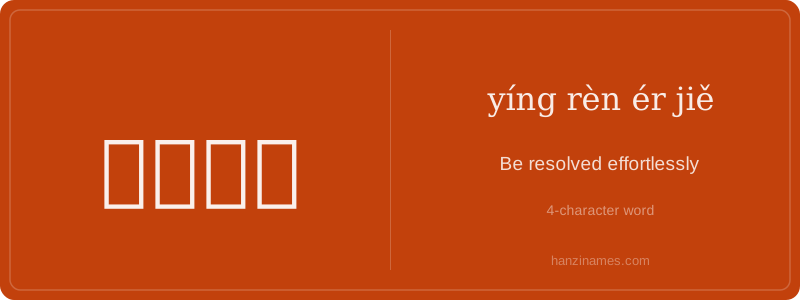
迎刃而解 means to be resolved effortlessly, often used to describe a situation where a problem is solved with ease and without resistance. It emphasizes the smooth and natural resolution of an issue, as if the problem simply dissolves on its own.
The word is composed of four characters: 迎 (yíng), meaning 'to meet' or 'to face'; 刃 (rèn), meaning 'blade' or 'edge'; 而 (ér), a conjunction meaning 'and'; and 解 (jiě), meaning 'to resolve' or 'to untie'. The phrase originates from the idea of meeting a blade and then solving the problem effortlessly, much like cutting through something with a sharp knife.
This expression is commonly used in both written and spoken Chinese to describe situations where challenges are overcome with minimal effort. It is often used in contexts such as problem-solving, conflict resolution, or when describing a smooth process. It reflects a cultural appreciation for efficiency and grace in handling difficulties.