不了
How to Understand
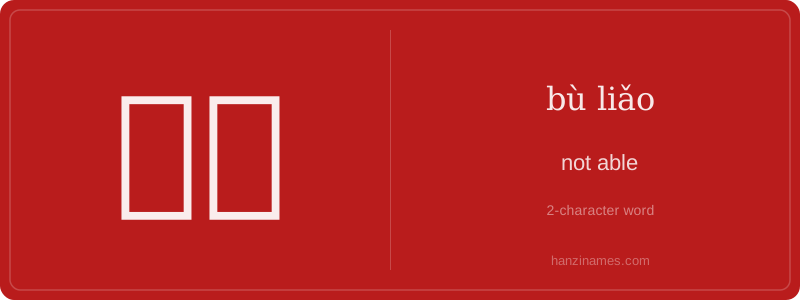
不了 is an adjectival phrase that conveys the meaning of 'not able' or 'unable to do something.' It often implies a limitation or inability in a situation, and it is commonly used in expressions that indicate an action cannot be completed or a state cannot be achieved.
The character 不 (bù) means 'not,' and 了 (le) is a particle indicating completion or change. Together, they form a structure that expresses inability or the impossibility of an action.
在中文中,不了 is often used in contexts where someone is unable to finish a task or achieve a goal. It can also be part of common expressions like “做不了” (zuò bù liǎo), meaning 'can't do it,' or “说不了” (shuō bù liǎo), meaning 'can't say it.' Understanding this phrase helps learners grasp the nuances of expressing limitations in Chinese conversations.