有所
How to Understand
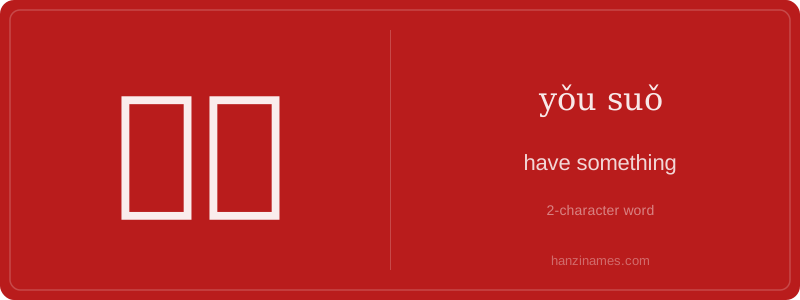
"有所" is a verb phrase that means 'to have something' or 'to possess something.' It is often used to indicate a specific state or condition, such as having a certain feeling, knowledge, or possession. Unlike the more general verb "有" (yǒu), which simply means 'to have,' "有所" adds a nuance of having something in a particular context or manner.
The character "有" (yǒu) means 'to have' or 'there is,' while "所" (suǒ) functions as a measure word or nominalizer, often used to form noun phrases. Together, "有所" creates a structure that emphasizes a specific type of possession or experience, often indicating an abstract or intangible thing.
"有所" is commonly used in both formal and informal contexts. For example, it can express that someone has a certain understanding, feeling, or ability. It is also found in classical Chinese literature and modern usage, making it a versatile and important phrase for learners to understand.