不在
How to Understand
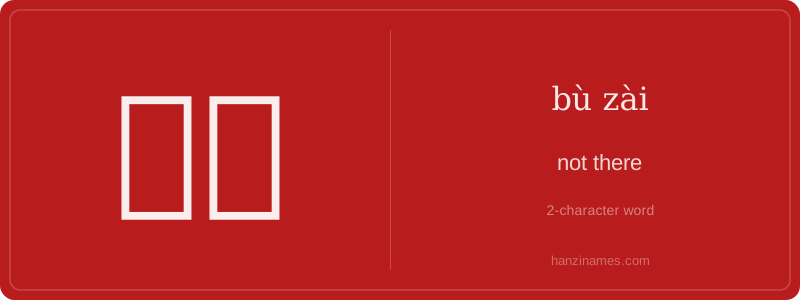
不在 means 'not there' or 'not present.' It is used to indicate the absence of someone or something in a specific place or situation. Unlike similar expressions like 没有 (méiyǒu), which means 'do not have,' 不在 specifically refers to location or presence.
The character 不 (bù) means 'not,' and 在 (zài) means 'at' or 'present.' Together, they form a phrase that negates the idea of being in a particular place or state. This combination is commonly used in daily conversation to describe physical or situational absence.
不在 is often used in everyday speech to explain why someone is unavailable, such as when answering the phone or explaining a delay. It also appears in idiomatic expressions and can be used metaphorically to describe emotional or mental absence.