不行
How to Say
👀 0
How to Write
Meaning: Not allowed
How to Understand
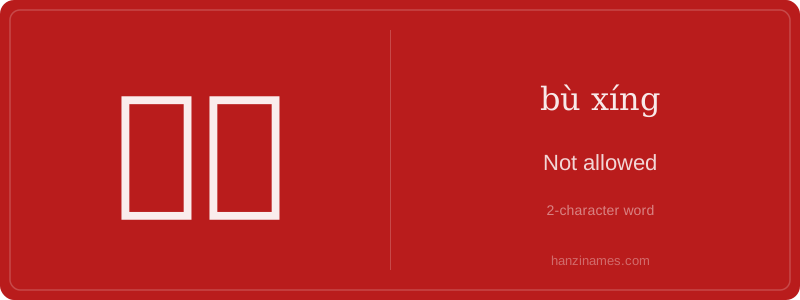
不行
不行 (bù xíng) means 'not allowed' or 'not acceptable.' It is used to indicate that something cannot be done or is not permitted, often in a negative response to a request or suggestion.
The character 不 (bù) means 'not,' and 行 (xíng) means 'to go' or 'to do.' Together, they form a phrase that literally translates to 'not go' or 'not do,' which has evolved to mean 'not allowed' or 'not acceptable.'
不行 is commonly used in daily conversations to refuse requests, express disapproval, or state limitations. It can also be used humorously or casually depending on the context. In formal settings, it is often used to indicate that something is against rules or regulations.
Example Sentences
这个计划不行,我们得重新考虑。
This plan won't work; we need to reconsider.
你不能在这里停车,这不行。
You can't park here; that's not allowed.