太后
How to Understand
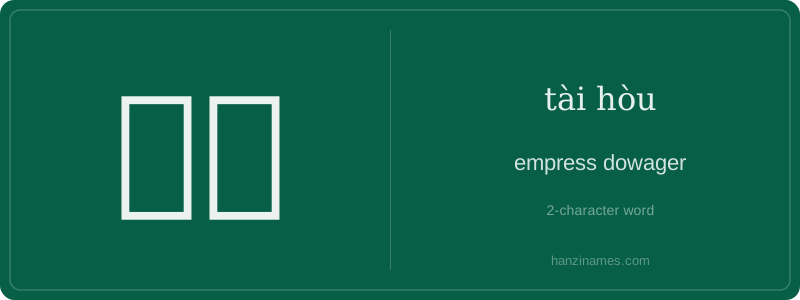
太后 (tài hòu) refers to the mother of an emperor, typically after his death, who holds significant political power in the imperial court. Unlike a regular empress, the empress dowager retains influence even after her son ascends the throne, often serving as a regent or advisor.
The character 太 (tài) means 'great' or 'supreme,' and 后 (hòu) originally meant 'monarch' or 'ruler.' Together, 太后 emphasizes the elevated status of the woman who is the mother of the emperor, highlighting both her royal lineage and her authority.
In historical contexts, the empress dowager played a crucial role in Chinese politics, sometimes even governing in place of a minor emperor. Today, the term is mainly used in historical or literary contexts, though it still appears in modern media and discussions about ancient China.