伸出
How to Understand
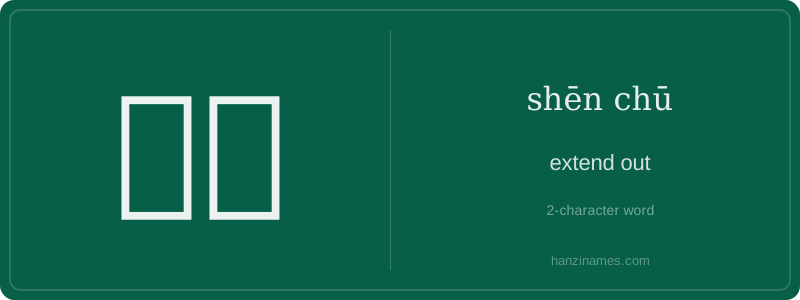
伸 is a verb meaning 'to stretch' or 'to extend,' and 出 means 'to go out' or 'to come out.' Together, 伸出 literally means 'to extend out' or 'to stick out.' It refers to the action of moving something outward from a position of rest or concealment.
The character 伸 originates from the idea of stretching or lengthening, often used in contexts like stretching one's limbs or extending a hand. The character 出 conveys the idea of movement from within to outside, as in 'coming out' or 'emerging.' Combined, 伸出 describes the physical act of extending something beyond its original position.
This phrase is commonly used in everyday language to describe actions such as extending an arm, sticking out a tongue, or even metaphorically referring to revealing something hidden. It appears frequently in both spoken and written Chinese, especially in descriptions of physical movements or expressions.