只不过
How to Understand
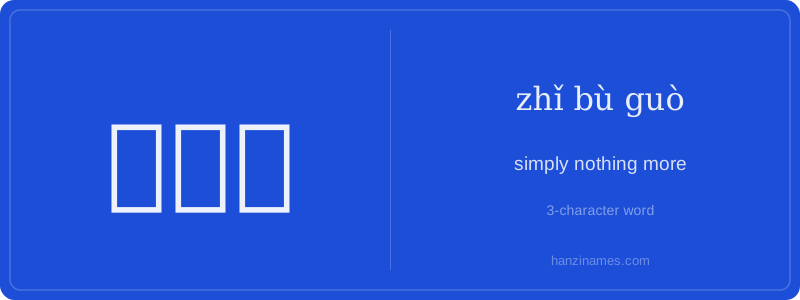
只不過 is an adverbial phrase that means 'just' or 'nothing more than.' It is used to downplay or minimize the significance of something, often to indicate that a situation is not as important or complicated as it might seem.
The phrase consists of three characters: 只 (zhǐ), meaning 'only' or 'just'; 不 (bù), the negation particle; and 過 (guò), which functions as a directional complement indicating completion. Together, they form a phrase that softens the tone and reduces emphasis on what is being said.
It is commonly used in casual speech to express modesty, understatement, or to de-escalate a situation. For example, it can be used when someone overestimates a problem or when a person wants to show humility about their achievements. It reflects a cultural tendency toward modesty and restraint in communication.