主权
How to Understand
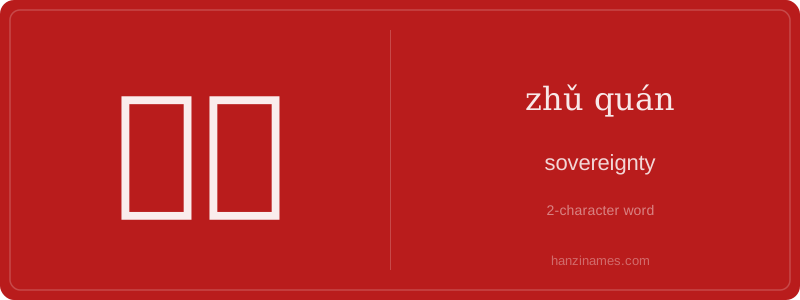
主权 refers to the authority of a state or nation to govern itself without external interference. It is a fundamental concept in international law and politics, emphasizing the independence and self-determination of a country.
The character 主 (zhǔ) means 'master' or 'principal,' while 权 (quán) means 'power' or 'right.' Together, they convey the idea of 'main power' or 'supreme authority,' highlighting the central role of a state in controlling its own affairs.
Sovereignty is often discussed in contexts such as territorial disputes, diplomatic relations, and national independence. It is a key principle in the United Nations Charter and plays a significant role in global politics. Understanding sovereignty helps learners grasp the complexities of international relations and the importance of national autonomy.