内心
How to Understand
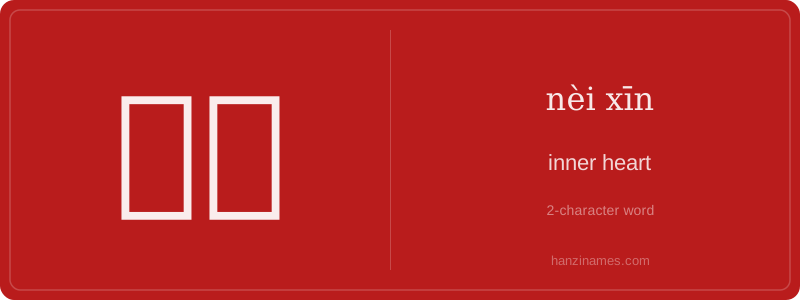
内心 refers to the inner heart or inner self, often used to describe one's true feelings, thoughts, or soul. It emphasizes the internal, genuine aspect of a person, as opposed to outward appearances or social masks.
The character 内 (nèi) means 'inside' or 'internal,' and 心 (xīn) means 'heart.' Together, they literally translate to 'inner heart,' symbolizing the core of one's being. This term has deep roots in Chinese philosophy and literature, where the heart is often seen as the seat of emotion and wisdom.
内心 is commonly used in emotional or reflective contexts, such as describing someone's true intentions or inner struggles. It appears in poetry, proverbs, and everyday speech, especially when discussing personal growth, sincerity, or emotional depth. Understanding 内心 helps learners grasp the cultural emphasis on authenticity and inner harmony in Chinese society.