摆脱
How to Understand
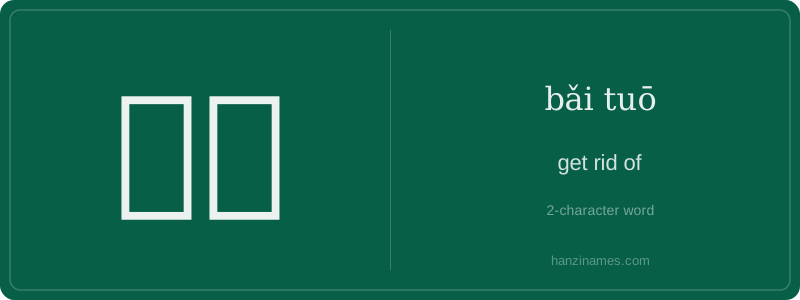
摆脱 means 'to get rid of' or 'to free oneself from.' It refers to the action of removing or escaping from a difficult, unpleasant, or restrictive situation, such as a problem, burden, or negative influence. Unlike similar terms like 'remove' or 'eliminate,' 摆脱 emphasizes the emotional or psychological relief of breaking free.
The character 摆 (bǎi) originally meant 'to swing' or 'to move,' and 脱 (tuō) means 'to remove' or 'to shed.' Together, they form a metaphorical expression for physically or metaphorically shaking off something unwanted. This combination reflects the idea of actively working to free oneself from a condition or object.
摆脱 is commonly used in daily conversations when discussing overcoming challenges, escaping from bad habits, or leaving a difficult situation. It can be used both literally and figuratively, making it a versatile and widely understood term in Chinese language and culture.