天子
How to Understand
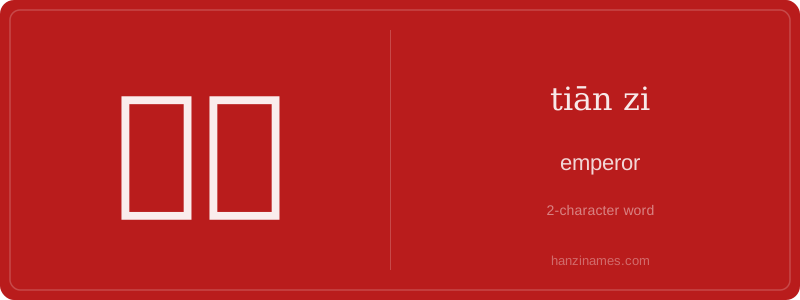
天子 (tiān zǐ) is a classical term for an emperor, literally meaning 'son of heaven.' It emphasizes the divine authority of the ruler, suggesting that the emperor was chosen by heaven to govern the world.
The character 天 (tiān) means 'heaven' or 'sky,' and 子 (zǐ) means 'son' or 'child.' Together, they imply a ruler who is both a descendant of heaven and a father figure to his people. This term is more formal and traditional than the common word for emperor, which is 皇帝 (huángdì).
天子 is often used in historical contexts, literature, or when referring to ancient Chinese dynasties. It carries a sense of reverence and spiritual authority. In modern usage, it may appear in phrases like 天子驾到 (tiān zǐ jià dào), meaning 'the emperor has arrived,' used humorously or ceremoniously.