王公
How to Understand
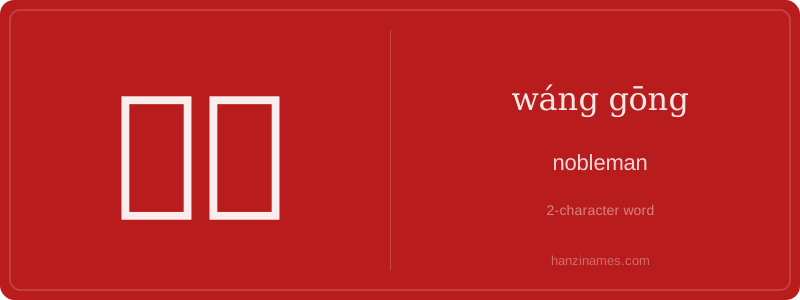
王公 refers to a noble or high-ranking official in ancient China, typically a title given to aristocrats or powerful figures. It is distinct from common terms like 'king' or 'emperor,' as it often denotes a regional ruler or a respected member of the court.
The character 王 (wáng) means 'king' or 'monarch,' while 公 (gōng) originally meant 'duke' or 'lord.' Together, they form a term that conveys respect and authority, reflecting the hierarchical structure of Chinese society.
Today, 王公 is mostly used in historical contexts or literary works. It may appear in stories about feudal dynasties, traditional dramas, or discussions of ancient governance. Learners should note that it is not commonly used in modern spoken Chinese but holds cultural significance in understanding historical texts.