无奈
How to Say
👀 0
How to Write
Meaning: helplessness
How to Understand
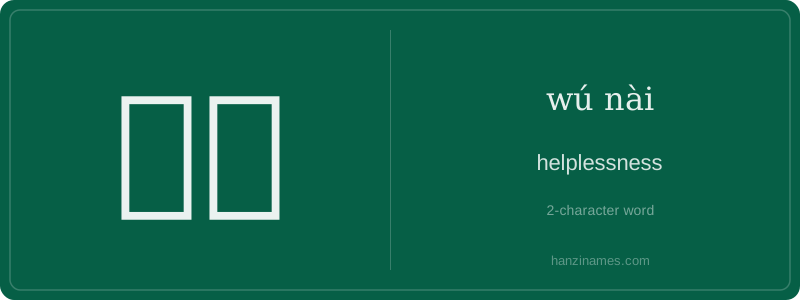
无奈
无奈 refers to a feeling of helplessness or resignation in the face of an unavoidable situation. It conveys a sense of powerlessness, often used when someone is forced to accept something they cannot change.
The character 无 (wú) means 'without' or 'nothing,' and 奈 (nài) means 'to withstand' or 'to endure.' Together, 无奈 literally translates to 'without endurance,' suggesting a state of being unable to resist or change a situation.
无奈 is commonly used in daily conversation to express frustration or acceptance of difficult circumstances. It appears in literature, poetry, and everyday speech, reflecting a cultural emphasis on resilience and adaptability in the face of adversity.
Example Sentences
他只能无奈地接受这个结果。
He could only reluctantly accept the outcome.
面对困难,她感到十分无奈。
Faced with difficulties, she felt very helpless.