垂直
How to Understand
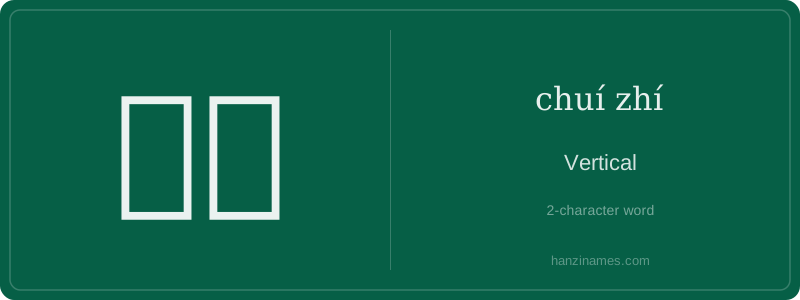
垂直 means 'vertical' in English, describing something that is straight up and down, perpendicular to the horizontal. It is often used to describe lines, directions, or positions that are not slanted or inclined.
The character 垂 (chuí) originally meant 'hanging down' or 'dangling,' suggesting a downward direction. 直 (zhí) means 'straight' or 'direct.' Together, they form a term that conveys a sense of straightness and vertical alignment, often associated with precision and structure.
Vertically is commonly used in technical contexts such as engineering, architecture, and mathematics. In daily life, it might describe a building's orientation, a person standing upright, or even the direction of a line on a graph. Understanding 垂直 helps in comprehending spatial relationships and measurements in both practical and abstract terms.