纠正
How to Understand
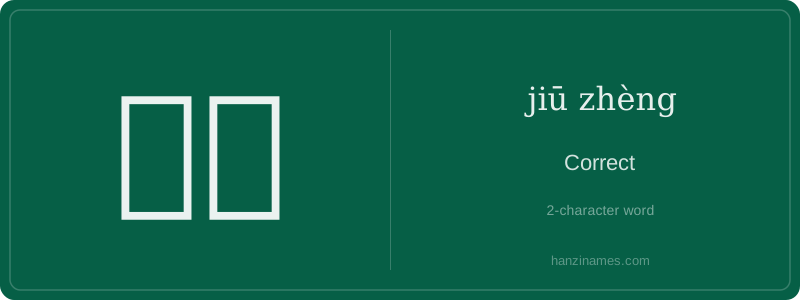
纠正 means 'to correct' or 'to rectify.' It refers to the action of identifying and fixing an error, mistake, or deviation from a standard. Unlike similar terms like 纠纷 (conflict), 纠正 focuses specifically on the process of correcting something.
The character 纠 (jiū) originally meant 'to entangle' or 'to twist,' but in this context, it conveys the idea of addressing a problem. 正 (zhèng) means 'right,' 'correct,' or 'proper.' Together, they form a term that emphasizes the act of making something right or accurate.
纠正 is commonly used in both formal and informal contexts, such as in education, business, and daily conversations. For example, a teacher might correct a student's homework, or a manager might correct a mistake in a report. It is also used in idioms like 纠正错误 (correcting mistakes), which highlights its importance in maintaining accuracy and integrity.