不及
How to Say
👀 0
How to Write
Meaning: not as good as
How to Understand
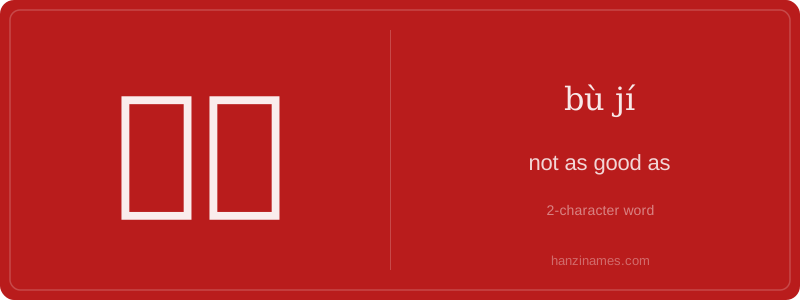
不及
不及 means 'not as good as' or 'not reaching the level of.' It is used to compare two things, indicating that one falls short of the other in quality, quantity, or standard.
The character 不 (bù) means 'not,' and 及 (jí) means 'to reach' or 'to come to.' Together, they form a phrase that expresses a lack of achievement or superiority compared to something else.
不及 is commonly used in both written and spoken Chinese to express shortcomings or inferiority. It often appears in contexts such as academic performance, product quality, or personal abilities. It is also seen in idioms like “望尘莫及” (wàng chén mò jí), meaning 'to be unable to catch up.'
Example Sentences
他的成绩不及同学。
His grades are not as good as his classmates'.
这个产品不及进口品牌。
This product is not as good as the imported brand.