武士
How to Understand
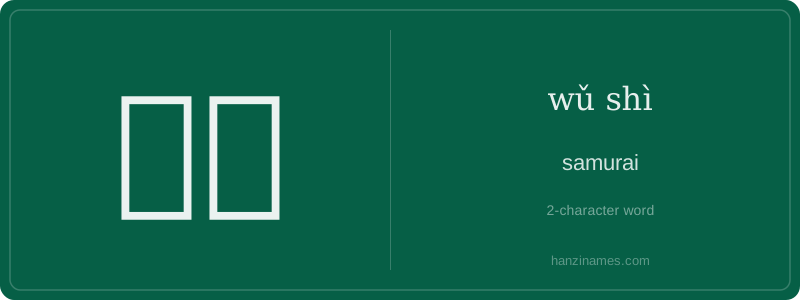
武士 (wǔ shì) is the Chinese term for 'samurai,' a class of elite warriors in feudal Japan known for their loyalty, discipline, and martial skills. While it is commonly translated as 'samurai,' the term can also refer to any noble warrior or soldier in a broader sense.
The character 武 (wǔ) means 'military' or 'martial,' and 士 (shì) means 'gentleman' or 'soldier.' Together, they form a term that emphasizes both military skill and noble status, reflecting the cultural values of honor and duty.
Though primarily associated with Japanese history, the term has entered English usage to describe the code and lifestyle of the samurai. It is often used in contexts related to historical fiction, martial arts, and cultural studies. In modern Chinese, it may also appear in literature or media referencing Japanese culture.