洪水
How to Understand
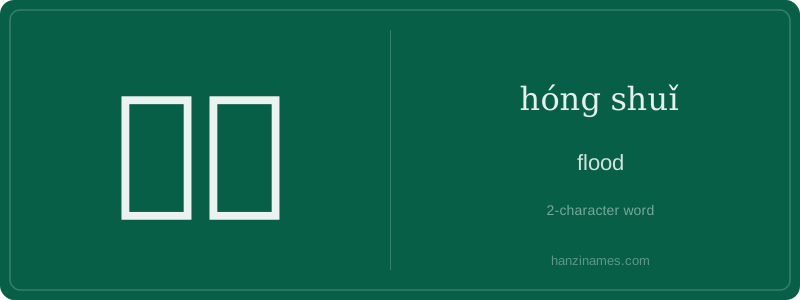
洪水 (hóng shuǐ) means 'flood' in English. It refers to an overflow of water from rivers, lakes, or oceans that covers normally dry land, often causing damage or destruction.
The character 洪 (hóng) originally meant 'great' or 'vast,' and is often used in words related to large-scale events, such as 洪水 (flood) or 洪大 (grand). 水 (shuǐ) means 'water.' Together, they form a word that literally means 'great water,' emphasizing the massive and destructive nature of a flood.
洪水 is commonly used in both literal and metaphorical contexts. In China, it has historical and cultural significance due to the frequent flooding of the Yellow River. It also appears in idioms and proverbs, such as 洪水猛兽 (hóng shuǐ měng shòu), meaning 'a flood and a wild beast,' which is used to describe something dangerous and uncontrollable.