老头
How to Understand
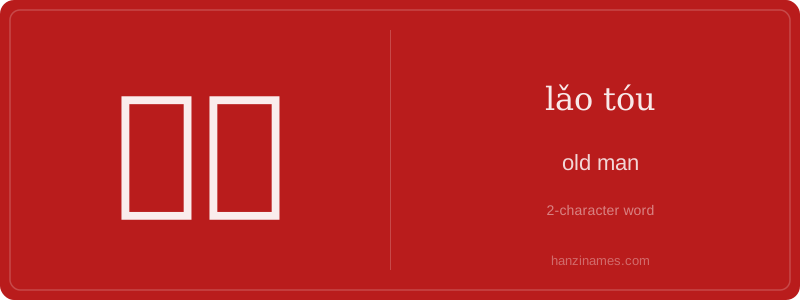
老头 is a common Chinese term for 'old man' or 'old gentleman.' It refers to an elderly male, often used in a neutral or affectionate way, though it can sometimes carry a slightly informal or colloquial tone depending on context.
The character 老 (lǎo) means 'old' or 'elderly,' and 头 (tóu) literally means 'head,' but in this context, it functions as a suffix to denote a person, similar to 'person' or 'guy' in English. Together, they form a term that describes an older male individual.
Older people are often respected in Chinese culture, and 老头 may be used in everyday speech when referring to an older man, especially in casual or familiar settings. It is not typically used in formal writing or speech, where more respectful terms like 老先生 (lǎoxiānsheng) might be preferred.