财物
How to Understand
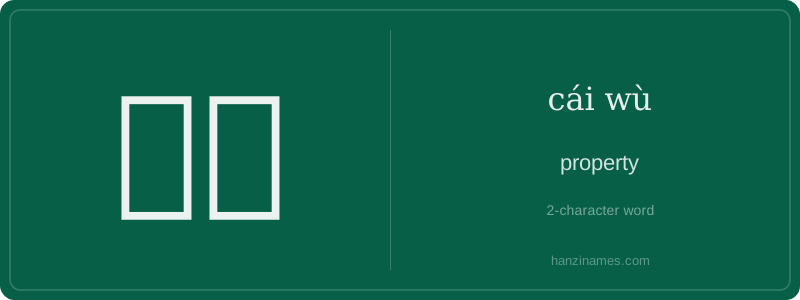
财物 refers to property or belongings, typically in the context of tangible assets such as money, goods, or personal items. It is often used in legal or formal contexts to describe what someone owns or is responsible for.
The character 财 (cái) means 'wealth' or 'fortune,' and 物 (wù) means 'thing' or 'object.' Together, they form a compound that emphasizes material possessions or assets, distinguishing them from abstract concepts like ideas or emotions.
财物 is commonly used in legal documents, news reports, or formal discussions about ownership, theft, or inheritance. It is also used in everyday language when talking about losing or recovering personal items. Understanding this term helps learners grasp the nuances of property-related conversations in Chinese society.