损伤
How to Understand
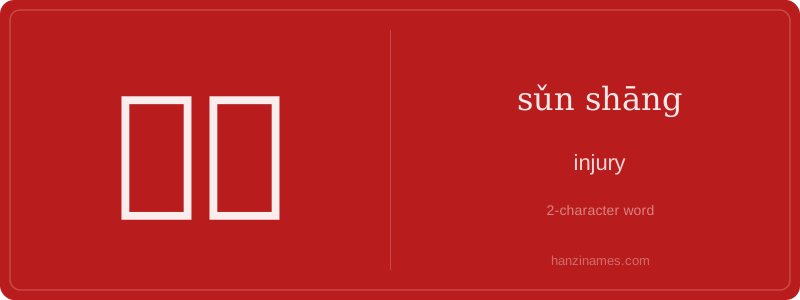
Damage or injury, typically referring to physical harm or damage to something. It can also be used metaphorically to describe harm to a relationship, reputation, or property.
The character 损 (sǔn) means 'to damage' or 'to reduce,' while 伤 (shāng) means 'wound' or 'hurt.' Together, they form a compound that literally translates to 'damage' or 'injury,' capturing the idea of harm caused by an external force or event.
损伤 is commonly used in medical contexts, legal documents, and everyday speech. It is often paired with other words like 严重 (serious), 轻微 (minor), or 永久 (permanent) to describe the nature of the injury. In Chinese culture, maintaining physical and emotional well-being is highly valued, making this term relevant in both personal and professional settings.