试点
How to Understand
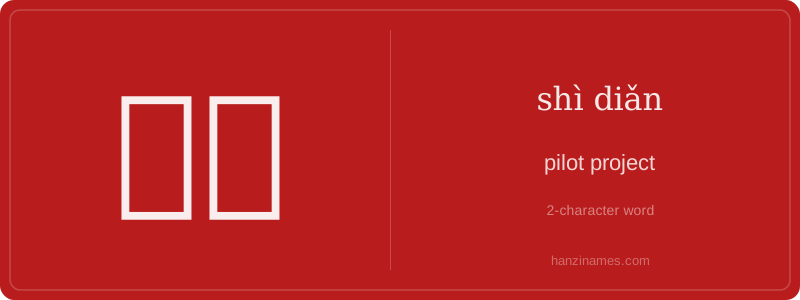
试点 refers to a pilot project or experimental initiative, often used to test new policies, products, or methods before full-scale implementation. It is commonly used in government, business, and social contexts to describe a controlled trial phase.
The character 试 (shì) means 'to try' or 'test,' while 点 (diǎn) literally means 'point' or 'spot.' Together, they imply a specific point or area where an experiment takes place, making 试点 a term that conveys the idea of testing something in a limited scope.
In China, 试点 is frequently used in policy-making, such as economic reforms or social programs, to assess outcomes before wider adoption. It reflects a pragmatic approach to innovation and problem-solving, emphasizing careful planning and evaluation before large-scale action.