来回
How to Understand
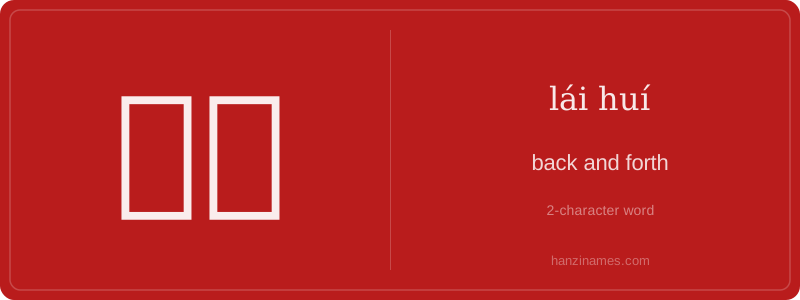
来回 means 'back and forth' or 'to and from,' describing movement between two points. It is often used to describe repeated motion or the act of traveling between places.
The character 来 (lái) means 'come' or 'to arrive,' while 回 (huí) means 'return' or 'to go back.' Together, they form a compound that literally translates to 'come back,' but in modern usage, it refers to repeated movement between two locations.
来回 is commonly used in daily conversation to describe trips, movements, or even actions that involve going and coming. For example, someone might say they are going back and forth between work and home, or a train might run back and forth between cities. It can also be used metaphorically, such as in discussions about decisions or opinions that shift back and forth.