退休
How to Understand
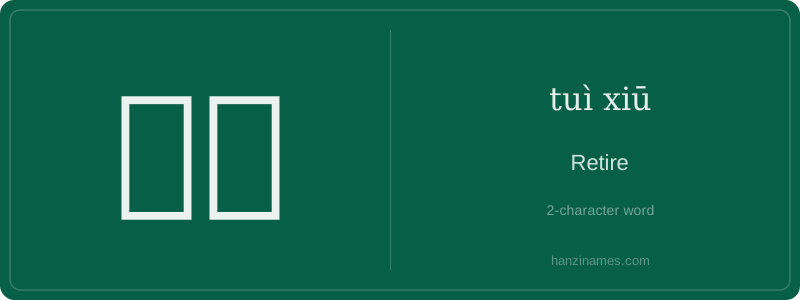
退休 refers to the act of leaving one's job or career, typically at the end of a person's working life. It is commonly associated with reaching a certain age, usually 60 for men and 55 for women in China, when individuals are eligible to stop working and receive a pension.
The character 退 (tuì) means 'to withdraw' or 'to step back,' while 休 (xiū) means 'rest' or 'to take a break.' Together, they form a term that literally translates to 'step back and rest,' symbolizing the transition from work to retirement.
In Chinese culture, retirement is seen as a time for relaxation, family, and personal interests. Many retirees engage in activities like gardening, traveling, or joining social groups. The concept of 退休 is also linked to respect for elders and the value placed on work-life balance.