悲剧
How to Understand
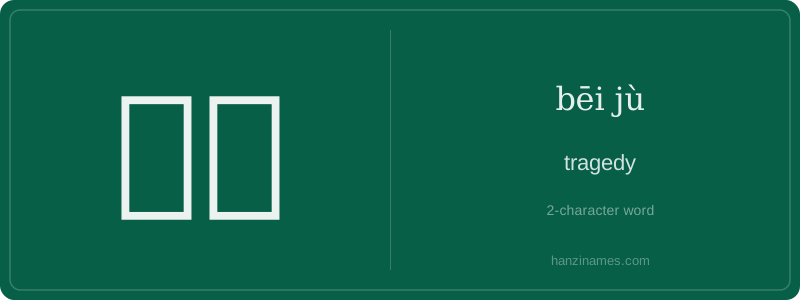
悲剧 means 'tragedy' in English, referring to a sad or unfortunate event, especially one involving death, suffering, or loss. It often carries emotional weight and is used to describe events that evoke deep sorrow or pity.
The character 悲 (bēi) means 'sadness' or 'sorrow,' while 剧 (jù) originally meant 'drama' or 'play.' Together, they form a term that describes a dramatic and sorrowful story or event, often with a fatal or devastating outcome.
In Chinese culture, 悲剧 is commonly used in literature, theater, and storytelling to depict profound human struggles and emotional conflicts. It is often contrasted with 喜剧 (xǐjù), meaning 'comedy.' Understanding 悲剧 can help learners grasp the emotional depth of Chinese narratives and cultural expressions.