悲
Character Story & Explanation
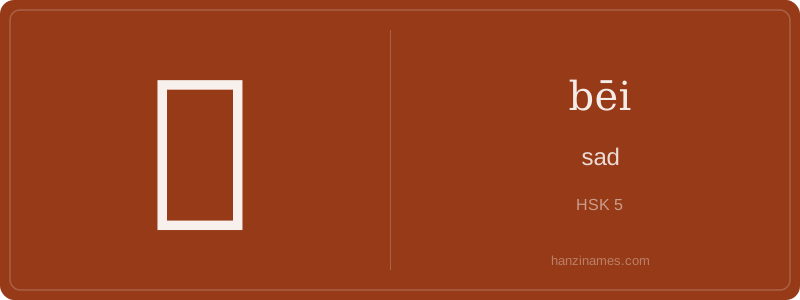
悲 is widely used in modern Chinese to express profound sorrow—especially in formal writing, news reports on disasters, memorial speeches, and classical poetry recitations. Common idioms include 悲欢离合 (bēi huān lí hé, 'sorrow, joy, separation, reunion'), describing life’s emotional cycles, and 悲天悯人 (bēi tiān mǐn rén, 'to grieve for heaven and pity humanity'), denoting compassionate sorrow for universal suffering—frequently cited in discussions of Confucian benevolence or humanitarian ethics.
The character’s earliest attested form appears in bronze inscriptions of the Western Zhou dynasty (c. 1046–771 BCE), where it combines 非 (fēi, 'not') above 心 (xīn, 'heart')—suggesting 'a heart not at peace'. While its oracle-bone origins are unconfirmed, the structure consistently reflects psychological distress rather than physical pain. Today, Chinese people commonly write 悲 in obituaries, condolence letters, and social media posts commemorating tragedies like the 2008 Sichuan earthquake.
The Chinese character 悲 (bēi) conveys deep, often solemn sorrow—more profound than everyday sadness. Unlike English 'sad', which can describe mild disappointment, 悲 implies grief tied to loss, injustice, or existential suffering. It appears in literary, philosophical, and ritual contexts, carrying moral weight: Confucian texts use it to denote empathetic mourning for others’ hardship, while Buddhist sutras employ it to describe the universal suffering (dukkha) inherent in life.
Western equivalents like 'grief' or 'woe' come closest—but lack 悲’s layered cultural resonance. 'Tragedy' evokes Greek drama’s catharsis; 'melancholy' suggests introspective artistry (e.g., Romantic poetry). 悲, however, is rarely aestheticized—it’s ethically grounded, often implying duty to mourn appropriately, as in ancestral rites or historical remembrance.
This character resists individualistic interpretation. In Chinese thought, sorrow isn’t purely private—it’s relational and socially indexed. To feel 悲 is to recognize shared human fragility, especially in the face of fate, aging, or moral failure. Its radical 心 (heart/mind) underscores that this emotion engages cognition and conscience—not just feeling. Thus, 悲 bridges affect and ethics in a way few Western terms do.
Example Sentences
Common Compounds
Similar Characters — Don't Mix These Up
Your First Step into Chinese Culture: Get a Chinese Name
Every journey into Chinese begins with a name. Use our free Chinese name generator to create a meaningful, personalized Chinese name that fits you perfectly.
Get My Chinese Name →