剥夺
How to Understand
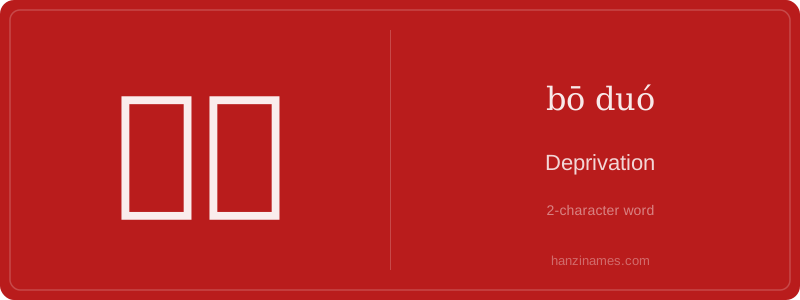
剥夺 refers to the act of taking away something that someone has a right to, often in a legal or social context. It implies a loss of rights, privileges, or possessions through official action or force.
The character 剥 (bāo) originally meant to strip or peel, while 夺 (duó) means to seize or take by force. Together, they form a compound meaning 'to deprive' or 'to strip of rights,' reflecting the idea of forcibly removing something important.
剥夺 is commonly used in legal and political contexts, such as when someone loses their citizenship, property, or freedoms. It is also used metaphorically to describe the loss of opportunities or basic human rights. In daily conversation, it often carries a negative connotation, indicating injustice or unfair treatment.