叹息
How to Understand
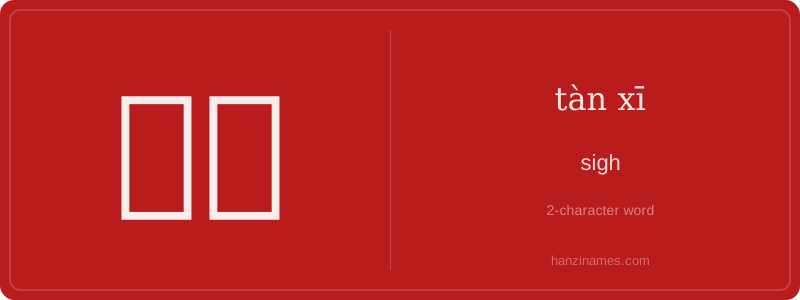
叹息 refers to a deep, audible breath that expresses feelings such as sadness, frustration, or resignation. It is often used to convey emotional depth or inner turmoil, and can also indicate a sense of helplessness or contemplation.
The character 叹 (tàn) originally meant to sigh or express sorrow, while 息 (xī) means breath or rest. Together, they form a word that literally describes the act of taking a deep breath to express emotion, reflecting the cultural emphasis on emotional expression through physical actions.
In daily life, 叹息 is commonly used in literature, poetry, and conversation to depict emotional states. It is often associated with moments of reflection, loss, or disappointment. In Chinese culture, expressing emotions openly is considered natural, and 叹息 serves as an important verbal and nonverbal cue in interpersonal communication.