特区
How to Understand
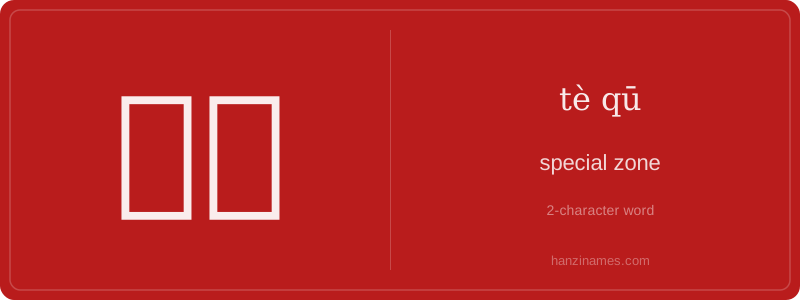
特区 (tè qū) refers to a special administrative region or a designated area with unique political, economic, or legal status. It is often used in the context of China's special administrative regions, such as Hong Kong and Macau, which have a high degree of autonomy while remaining part of China.
The character 特 (tè) means 'special' or 'particular,' emphasizing uniqueness, while 区 (qū) means 'district' or 'area.' Together, they describe a region set apart from the rest for specific purposes or privileges.
特区 is commonly used in formal and official contexts, especially when discussing governance, economics, or international relations. Understanding this term helps learners grasp China's complex regional structure and the concept of autonomy within a unified country.