黄昏
How to Say
👀 0
How to Write
Meaning: twilight
How to Understand
黄昏
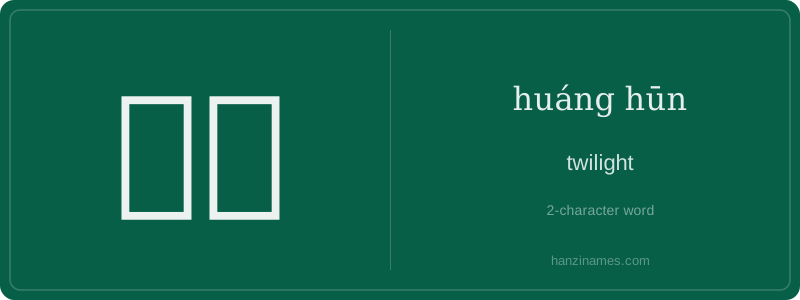
黄昏 refers to the time of day when the sun is setting and daylight is fading into night. It is often associated with a peaceful, reflective mood and is commonly used in poetry and literature to evoke a sense of transition or melancholy.
The character 黄 (huáng) means 'yellow,' which may refer to the golden hue of the sky during sunset. 昏 (hūn) means 'dim' or 'fading,' suggesting the end of the day. Together, they create a vivid image of the day's end.
黄昏 is frequently used in both modern and classical Chinese contexts. It appears in songs, poems, and everyday conversation to describe the beauty of the evening sky or to set a romantic or contemplative tone. It is also used metaphorically to represent the end of an era or a period of change.
Example Sentences
黄昏时分,天空被染成了橘红色。
At twilight, the sky turned orange-red.
他们在黄昏时分散步,享受宁静的时光。
They took a walk at dusk, enjoying the quiet time.