制裁
How to Understand
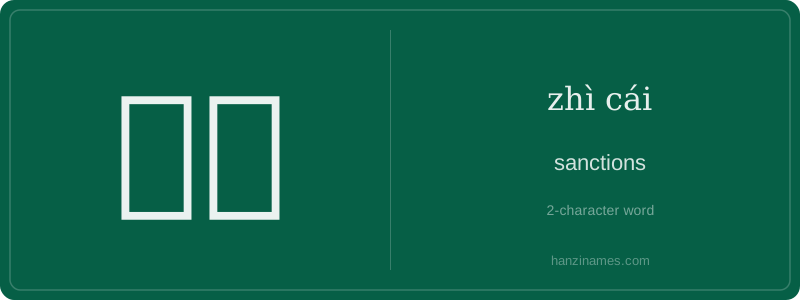
制裁 refers to formal penalties or measures taken against an individual, group, or country for violating laws, regulations, or international norms. It often involves economic, political, or legal actions intended to punish or deter wrongdoing.
The character 制 (zhì) means 'to regulate' or 'to impose,' while 裁 (cái) means 'to cut' or 'to decide.' Together, they imply the act of imposing a decision or penalty, often through official channels. This term carries a strong sense of authority and formality.
制裁 is commonly used in political and legal contexts, especially in international relations. For example, countries may impose sanctions on another nation for human rights violations or nuclear proliferation. Understanding this term helps learners grasp how power and rule are exercised in global affairs.