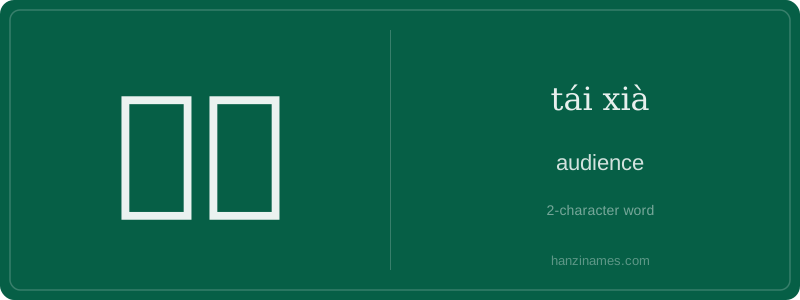
台下
How to Say
👀 0
How to Write
Meaning: audience
How to Understand
台下
台下 refers to the audience or people sitting in front of a stage. It specifically denotes the group of spectators watching a performance, speech, or event from below the stage area.
The character 台 (tái) originally meant a platform or stage, while 下 (xià) means 'below' or 'down.' Together, they literally mean 'below the stage,' which has evolved into the term for the audience seated in front of it.
台下 is commonly used in contexts like performances, speeches, and public events. In Chinese culture, showing respect to the audience is important, and understanding terms like 台下 helps grasp the dynamics between performers and spectators. It is also used metaphorically in some situations to refer to those who are not in the spotlight.
Example Sentences
观众坐在台下,静静地观看表演。
The audience sat in the audience, quietly watching the performance.
他在台上演讲,台下的人认真聆听。
He gave a speech on stage, and the people in the audience listened carefully.