诸侯
How to Understand
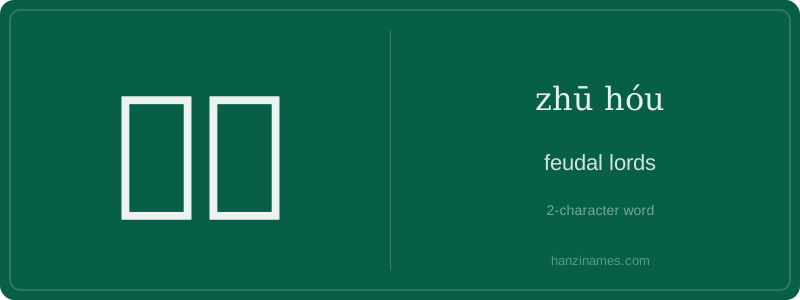
诸侯 (zhū hóu) refers to feudal lords or regional rulers in ancient China, particularly during the Zhou Dynasty. These were semi-independent rulers who controlled their own territories but owed allegiance to the Son of Heaven (the emperor). Unlike modern political leaders, they had significant autonomy and often wielded considerable power.
The character 诸 (zhū) means 'various' or 'all,' while 侯 (hóu) is a title for a noble or high-ranking official. Together, 诸侯 suggests a group of such nobles or rulers. The term has historical roots in the feudal system that shaped early Chinese governance and social structure.
In modern usage, 诸侯 can refer metaphorically to powerful individuals or groups with significant influence in a particular area. It is commonly used in historical contexts or in discussions about traditional Chinese politics. Understanding 诸侯 helps learners grasp the complexity of ancient Chinese society and its hierarchical systems.