违背
How to Say
👀 0
How to Write
Meaning: violate
How to Understand
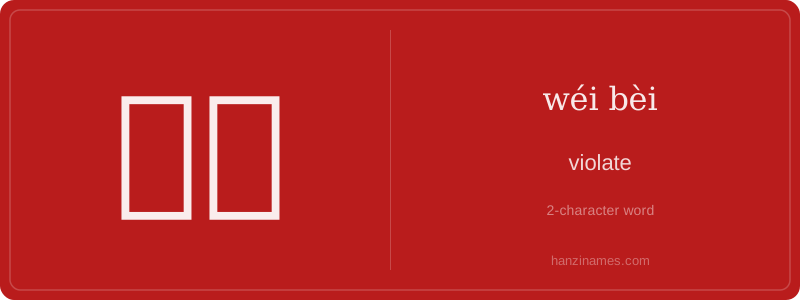
违背
违背 means to violate or go against something, such as rules, agreements, or moral standards. It emphasizes the act of breaking a principle or expectation, often with negative consequences.
The character 违 (wéi) originally meant 'to deviate' or 'to go against,' while 背 (bèi) literally means 'back' but is commonly used in expressions like 背叛 (to betray). Together, 违背 conveys the idea of turning away from established norms or commitments.
It is frequently used in legal, ethical, and social contexts. For example, it can describe breaking a contract, ignoring laws, or acting against one's values. In Chinese culture, maintaining harmony and respect for rules is important, so 违背 often carries a strong sense of disapproval.
Example Sentences
他违背了对朋友的承诺。
He violated his promise to a friend.
这家公司违背了法律法规。
This company violated the laws and regulations.