工农
How to Say
👀 0
How to Write
Meaning: workers and peasants
How to Understand
工农
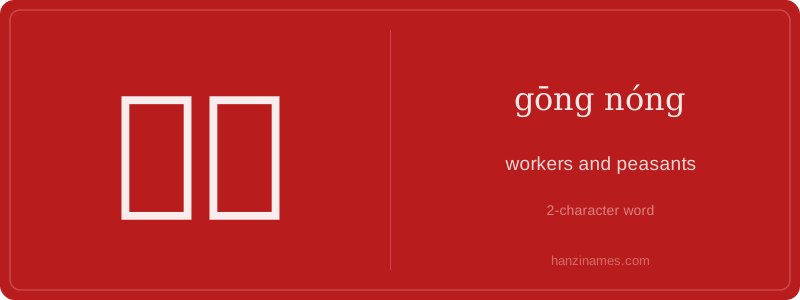
工农 (gōng nóng) refers to the collective term for workers and peasants, often used in historical or political contexts in China. It represents the working class and rural laborers, emphasizing their role in socialist ideology.
The character 工 (gōng) means 'work' or 'labor,' while 农 (nóng) means 'agriculture' or 'farmer.' Together, they symbolize the two main classes of labor in a society, especially in the context of Marxist-Leninist theory.
Historically, 工农 was an important concept during the early years of the People's Republic of China, highlighting the alliance between industrial workers and rural farmers as the foundation of the state. Today, it is still used in formal or traditional settings, though less commonly in everyday speech.
Example Sentences
工农是国家的中坚力量。
Workers and peasants are the backbone of the country.
政府重视工农的权益。
The government pays attention to the rights of workers and peasants.