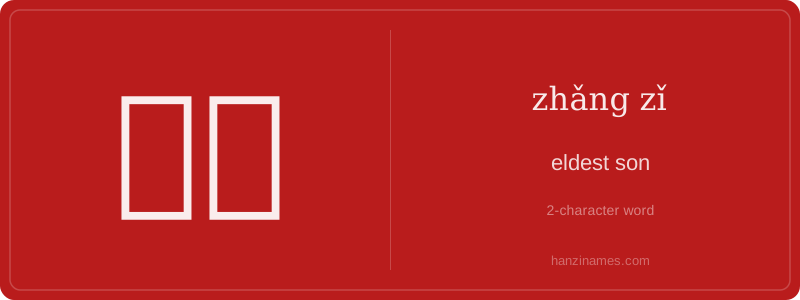
长子
How to Say
👀 0
How to Write
Meaning: eldest son
How to Understand
长子
长子 (zhǎng zǐ) refers to the eldest son in a family. It specifically denotes the first-born male child, often carrying cultural and familial significance.
The character 长 (cháng) means 'long' or 'eldest,' while 子 (zǐ) is a common suffix meaning 'child' or 'son.' Together, they form a term that emphasizes the position of the eldest son within a family hierarchy.
长子 is commonly used in family contexts, especially when discussing inheritance, responsibilities, or traditional roles. In Chinese culture, the eldest son may have specific duties, such as caring for parents or managing family affairs. This term is also used in historical or literary contexts to highlight family structure and lineage.
Example Sentences
他是家里的长子,负责照顾年迈的父母。
He is the eldest son in the family and is responsible for taking care of his aging parents.
长子在家族中享有很高的地位。
The eldest son holds a very high status in the family.