不中
How to Understand
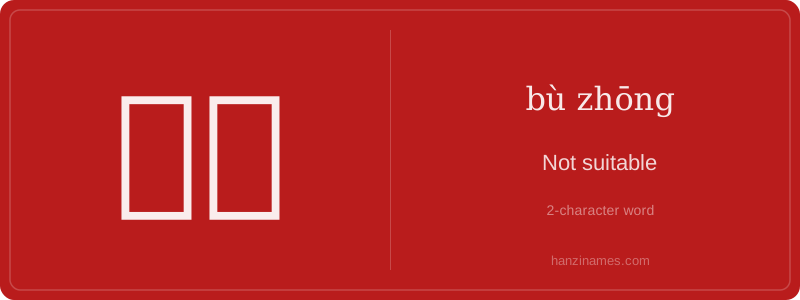
不中 (bù zhōng) means 'not suitable' or 'not correct.' It is often used to describe something that does not meet expectations, standards, or requirements. Unlike similar terms like 不对 (bù duì), which means 'wrong,' 不中 emphasizes a lack of suitability rather than an outright mistake.
The character 不 (bù) means 'not,' and 中 (zhōng) originally meant 'middle' or 'center,' but in this context, it conveys the idea of 'fitting' or 'meeting the mark.' Together, 不中 suggests something that fails to align with what is expected or desired.
不中 is commonly used in daily conversations to express disappointment or dissatisfaction. For example, it can be used when a suggestion doesn't work or when something isn't appropriate for a situation. It's also found in idioms and expressions that highlight misalignment or failure to meet standards.