下山
How to Understand
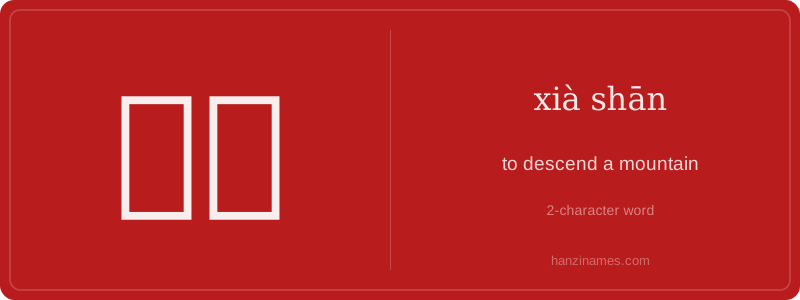
下山 (xià shān) literally means 'to descend a mountain.' It is primarily used as a verb to describe the action of going down from a mountain, often in a physical or metaphorical sense. Unlike simple terms like 'go down,' it specifically implies movement from a high place to a lower one, typically involving elevation change.
The character 下 (xià) means 'down' or 'below,' while 山 (shān) means 'mountain.' Together, they form a compound that emphasizes both direction and terrain. This word has roots in classical Chinese, where it was used in poetry and travel literature to describe journeys through natural landscapes.
下山 is commonly used in daily conversation when describing activities like hiking, climbing, or even metaphorically referring to leaving a difficult situation. It also appears in idioms and expressions related to life transitions or changes in status.