欺骗
How to Understand
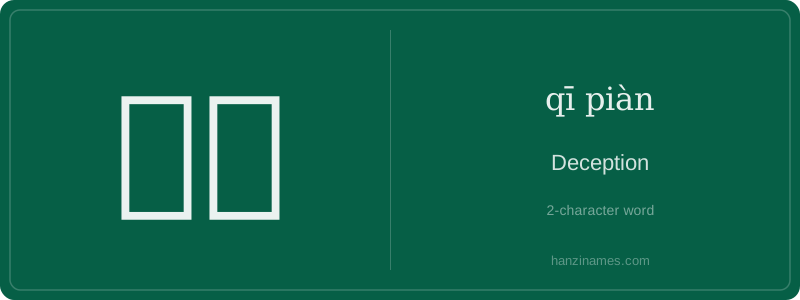
欺骗 refers to the act of deceiving or misleading someone, often with intent to cause harm or gain an advantage. It implies a deliberate falsehood or trickery, differentiating it from accidental misunderstandings or innocent mistakes.
The character 欺 means 'to bully' or 'to deceive,' and 骗 means 'to trick' or 'to swindle.' Together, they form a compound that emphasizes the intentional nature of deception, often involving manipulation or false information.
In daily use, 欺骗 is commonly used in contexts such as fraud, dishonest relationships, or political manipulation. It carries a strong negative connotation and is often associated with betrayal or unethical behavior. In Chinese culture, trust is highly valued, making deception a serious violation of social norms.