尾巴
How to Say
👀 0
How to Write
Meaning: tail
How to Understand
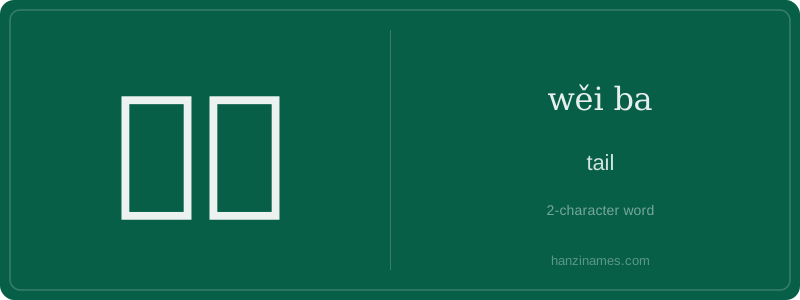
尾巴
尾巴 (wěi ba) means 'tail' in English, typically referring to the posterior part of an animal or object. It is commonly used for animals like dogs, cats, and even humans in informal contexts.
The character 尾 (wěi) originally meant 'tail' and was used in ancient texts to describe the end of something. 巴 (bā) is a common suffix in Chinese that can denote a small or soft part, contributing to the overall meaning of 'tail' as a soft, appendage-like structure.
In everyday use, 尾巴 appears in expressions like '摇尾巴' (yáo wěi ba), meaning 'to tail-wag,' often used metaphorically to describe someone who is overly submissive or eager to please. It is also used humorously or affectionately in casual speech.
Example Sentences
他的狗在门口摇着尾巴迎接他。
His dog was wagging its tail at the door to greet him.
那只猴子的尾巴很长,让它能够挂在树上。
The monkey had a long tail that allowed it to hang from the tree.