反之
How to Say
👀 0
How to Write
Meaning: on the contrary
How to Understand
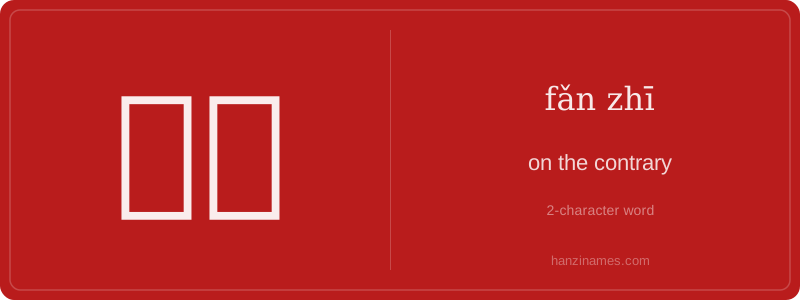
反之
反之 means 'on the contrary' or 'in contrast,' used to introduce a situation that is opposite to what was previously mentioned.
The character 反 (fǎn) means 'opposite' or 'contrary,' and 之 (zhī) is a classical particle often used to indicate possession or to connect words. Together, they form a phrase that highlights a contrast or reversal of a previous statement.
反 is commonly used in expressions like 反面 (fǎnmiàn, 'the reverse side') or 反对 (fǎnduì, 'to oppose'). 之 is a versatile particle that can function as a pronoun or a grammatical marker. In modern usage, 反之 is often found in written Chinese to emphasize a contrasting idea, especially in formal or academic contexts.
Example Sentences
我们不能只看到表面,反之,我们应该深入分析。
We cannot only look at the surface; on the contrary, we should analyze deeply.
他喜欢安静,反之,她喜欢热闹。
He likes quiet, on the contrary, she likes lively environments.