南斯拉夫
How to Understand
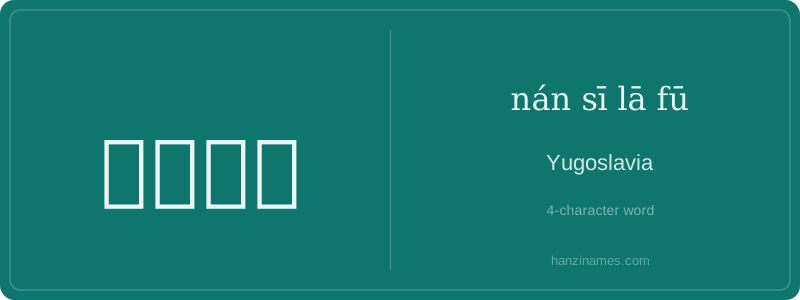
南斯拉夫 is the Chinese name for the former socialist state of Yugoslavia, which existed from 1929 to 2003. It was a multi-ethnic country located in Southeast Europe, comprising several republics and regions.
The characters 南 (nán) means 'south,' 斯 (sī) is a transliteration of the Slavic suffix '-stvo' or 'slav,' 拉 (lā) represents the Slavic root 'la,' and 夫 (fū) is a common suffix in place names. Together, they form a phonetic and semantic representation of the region's name in Chinese.
南斯拉夫 is often used in historical contexts, especially when discussing the Balkans, the Yugoslav Wars, or the dissolution of the state into smaller countries like Serbia, Croatia, and Bosnia. Understanding this term helps learners grasp historical and geopolitical discussions in Chinese media and literature.