抗击
How to Understand
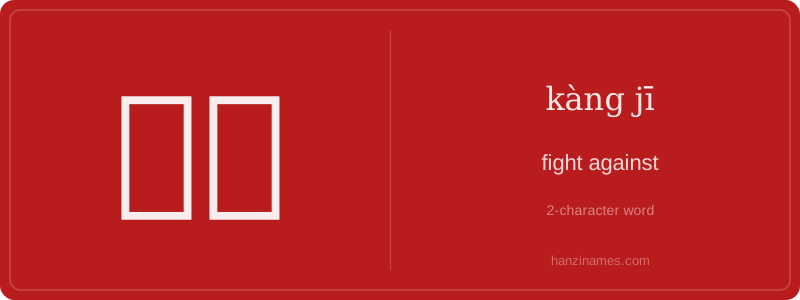
抗击 means 'to fight against' or 'to resist.' It is commonly used to describe efforts to combat a threat, such as a disease, enemy, or challenge. Unlike similar terms like 抗争 (kàngzhēng), which implies a more prolonged struggle, 抗击 often suggests a direct and active response to an immediate danger.
The character 抗 (kàng) originally meant 'to resist' or 'to oppose,' while 击 (jī) means 'to strike' or 'to attack.' Together, they form a compound verb that emphasizes active resistance or confrontation.
抗击 is frequently used in contexts like public health (e.g., fighting a virus), military actions, or social movements. It is also used in media and political discourse to describe collective efforts against challenges. In daily speech, it conveys determination and courage in the face of adversity.